
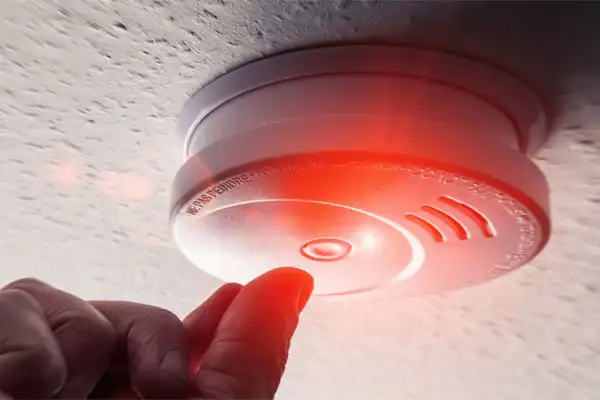
Put a smoke detector inside every bedroom, outside each sleeping area, and on every level of the home, including the basement. Put a carbon monoxide detector outside each sleeping area and on every level. If your home has fuel-burning appliances or an attached garage, New York requires carbon monoxide alarms.
Smoke Detector Placement
- Inside each bedroom
- In the hallway outside sleeping areas
- On every level, including finished and unfinished basements
- At the bottom of basement stairs, on the ceiling or high on the wall
- In the living room or main gathering area on levels without bedrooms
Where Not to Put Them
- Too close to the kitchen, where cooking causes false alarms
- Right outside bathrooms, where shower steam can set them off
- Near windows, doors, or air vents, where drafts can push smoke away
- At the peak of a vaulted ceiling, where trapped air can keep smoke from reaching them
Follow the manufacturer’s instructions for exact distances from walls, ceilings, and kitchens.
Carbon Monoxide Detector Placement
- Outside each sleeping area
- On every level of the home
- Near, but not right next to, fuel-burning appliances like furnaces, boilers, and water heaters
- In rooms over or next to an attached garage
Combination smoke and CO alarms are fine for many spots, as long as they’re placed where both types of detection are needed.
New York Requirements to Know
- Carbon monoxide alarms: New York’s Amanda’s Law requires CO alarms in homes with fuel-burning appliances or an attached garage.
- Battery-only smoke alarms: New York requires new or replacement battery-only smoke alarms to have a sealed, non-removable battery that lasts 10 years.
Requirements can change, and some towns add their own, so check with your local building department, especially when selling a home or renovating.
Hardwired vs. Battery Alarms
Hardwired alarms connect to your electrical system and have a battery backup. Interconnected alarms all sound when one detects smoke or CO, which matters in larger homes where you might not hear an alarm on another floor. Many renovations and new construction require hardwired, interconnected alarms.
Testing and Replacement
- Test alarms monthly with the test button.
- Replace smoke alarms every 10 years.
- Replace CO alarms at the end of their rated life, often 5 to 10 years. Check the label.
Get Help With Your Detectors
JSP Home Services has served Kingston and the Hudson Valley since 2006. Our licensed electricians install hardwired, interconnected smoke and CO detectors and can tell you where your home needs coverage, with upfront pricing.